


![Heayy Duty Diagonal Cutting Pliers [Industrial Grade S Type]](http://www.jianquan-tools.com/cache/image/catalog/products/product-71/JQ24-HDC002-560x560.png)
![Heayy Duty Diagonal Cutting Pliers [Industrial Grade S Type]](http://www.jianquan-tools.com/cache/upload/avatar/h61EH43dGyLAeXDTYZsTbaKwXPz2pILGlKvaZiAN-500x500.png)
![Heavy Duty Diagonal Cutting Pliers [With wire stripping function]](http://www.jianquan-tools.com/cache/image/catalog/products/product-73/JQ24-HDC004-560x560.png)
![Aviation Snips TaiWan Type [Straight Cut]](http://www.jianquan-tools.com/cache/image/catalog/products/product-74/JQ24-A001-560x560.png)
![Heavy Duty Diagonal Cutting Pliers [Industrial Grade L Type]](http://www.jianquan-tools.com/cache/image/catalog/products/product-70/JQ24-HDC001-560x560.png)
Introduction: Understanding Cutting Pliers and Diagonal Pliers
Pliers are essential hand tools found in every toolbox, whether you're a professional tradesperson or a DIY enthusiast. Among the various types, cutting pliers and diagonal pliers are often used interchangeably, but they have distinct features and functions. In this blog post, we’ll break down the differences between these two commonly used pliers, helping you make an informed decision about which tool is best suited for your tasks.
What Are Cutting Pliers?
Cutting pliers (also known as standard cutting pliers or side cutters) are designed primarily for cutting soft to medium-hard wire. They feature a flat, sharp cutting edge that runs parallel to the handles. These pliers are available in various sizes and are commonly used in fields such as electronics, electrical work, and general household tasks.
Key Features of Cutting Pliers:
-
Cutting edges: These pliers typically have straight or slightly angled cutting edges, perfect for cutting wire.
-
Handles: Ergonomically designed for comfort and control, with an emphasis on reducing hand strain during extended use.
-
Size: Cutting pliers come in different sizes, suitable for cutting everything from fine wires to thicker cables.
-
Applications: Ideal for cutting wire, nails, and small fasteners.
What Are Diagonal Pliers?
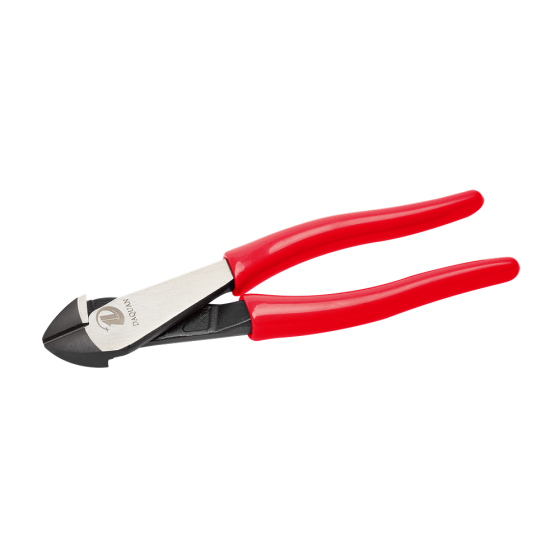
Diagonal pliers (also called diagonal cutting pliers or diagonal cutters) are similar to cutting pliers, but they have one distinctive feature: the cutting edges are set at an angle to the handle. This angled design allows for a more precise cut in tight spaces and is particularly useful when working in confined areas. Diagonal pliers are often used for tasks that require cutting through wire, nails, and other materials where access is limited.
Key Features of Diagonal Pliers:
-
Angled cutting edges: The cutting edges of diagonal pliers are positioned at a slant (usually around 15-30 degrees) relative to the handle, making them more versatile in tight or angled spaces.
-
Handle design: Similar to cutting pliers, diagonal pliers have ergonomic handles, but the angle helps to leverage force efficiently.
-
Size and shape: Diagonal pliers tend to be more compact and are available in small sizes for precise, detailed cuts.
-
Applications: Perfect for cutting wire in tight spaces, trimming excess material, and working with electronics or small components.
Key Differences Between Cutting Pliers and Diagonal Pliers
| Feature | Cutting Pliers | Diagonal Pliers |
|---|---|---|
| Cutting Edge Orientation | Parallel to handles | Angled at 15-30 degrees |
| Main Use | Cutting wires, nails, and small fasteners | Cutting wire in tight spaces, trimming |
| Precision | Less suited for tight or angled spaces | More precise for detailed, confined cuts |
| Design | Straight edges, larger cutting capacity | Angled edges for increased leverage in compact spaces |
| Common Applications | Electrical work, general repairs | Electronics, automotive, and detailed work |
When to Use Cutting Pliers vs. Diagonal Pliers?
Cutting Pliers are the tool of choice when you need a versatile cutting tool for larger tasks or when precision is not as critical. They’re perfect for cutting through various types of wire, trimming nails, or performing general repair work. If you're working in open spaces where you have enough room to maneuver the tool, cutting pliers will get the job done quickly and effectively.
Diagonal Pliers, on the other hand, excel in precision cutting, especially when you're working in confined spaces where access is limited. The angled design of diagonal pliers allows you to get into tight corners and make precise cuts on small, delicate materials. For tasks like trimming excess wire in electrical circuits or cutting small components in a cramped environment, diagonal pliers are the ideal tool.
Which Tool Should You Choose?
Both cutting pliers and diagonal pliers are essential tools in any toolkit, but choosing the right one depends on your specific needs:
-
Choose Cutting Pliers if you’re:
-
Working on general repairs.
-
Cutting larger wire or thicker materials.
-
Performing tasks in open spaces where precision cutting is less of a concern.
-
-
Choose Diagonal Pliers if you’re:
-
Working in tight spaces or angles.
-
Handling delicate, precise cutting tasks (e.g., electronics, jewelry-making, automotive work).
-
Needing a tool that gives you better leverage in confined areas.
-
Conclusion: Cutting Pliers vs. Diagonal Pliers – Which Is Right for You?
Understanding the differences between cutting pliers and diagonal pliers will help you select the right tool for your tasks. While both are designed for cutting, their features make them ideal for different applications. Whether you're tackling a big project or making detailed cuts in small spaces, having both types of pliers in your toolkit ensures you're always prepared for any task.